Experience
Reimagining the ocean through Maldivian eyes
Long before marine conservation programmes, scientific surveys, and international ocean agreements, the people of the Maldives understood something that the world is only now beginning to rediscover.
The ocean is not separate from us.
It never was.
For over two thousand years, the sea has shaped every aspect of life across these islands. It appears in folklore, language, navigation, livelihoods, faith, and identity. To understand the Maldives is to understand the ocean not as a destination, but as a companion, teacher, provider, and sometimes a mystery.
Today, as the world marks World Oceans Day under the theme "REIMAGINE: Beyond the world we know, a new relationship with our ocean," the Maldives offers a reminder that some of the oldest relationships with the sea are still alive.
When the ocean was a place of legends
For early island communities, the ocean was both life-giving and unknowable.
Its vastness inspired stories that travelled across generations long before they were ever written down.
Among the most enduring is the legend of Rannamaari, perhaps the most famous story in Maldivian folklore. According to historical chronicles, a terrifying sea creature emerged from the waters surrounding Malé and demanded regular sacrifices. The story became deeply intertwined with the Maldives' conversion to Islam in the twelfth century and remains one of the country's best-known legends.
The reefs themselves were believed to hold mysteries. Stories of Faru Fureytha, supernatural beings said to inhabit reefs and surrounding waters, reflected the respect island communities held for the sea. To sailors navigating dangerous channels and fishermen venturing beyond the reef edge, the ocean was a place that demanded humility.
These stories may belong to folklore, but they reveal something important. The ocean was never viewed as distant. It occupied the imagination as much as it occupied the horizon.
Reading the sea
While myths explained the mysteries of the ocean, experience taught Maldivians how to live with it.
Long before modern navigation, Maldivian sailors crossed vast stretches of the Indian Ocean guided by an intricate understanding of winds, currents, stars and wave patterns.
The seasonal monsoon winds, known as Iruvai and Hulhangu, dictated travel, trade and fishing. Generations of seafarers learned to read cloud formations, swells and currents with remarkable precision.
The language itself reflects this expertise.
In English, a reef is simply a reef.
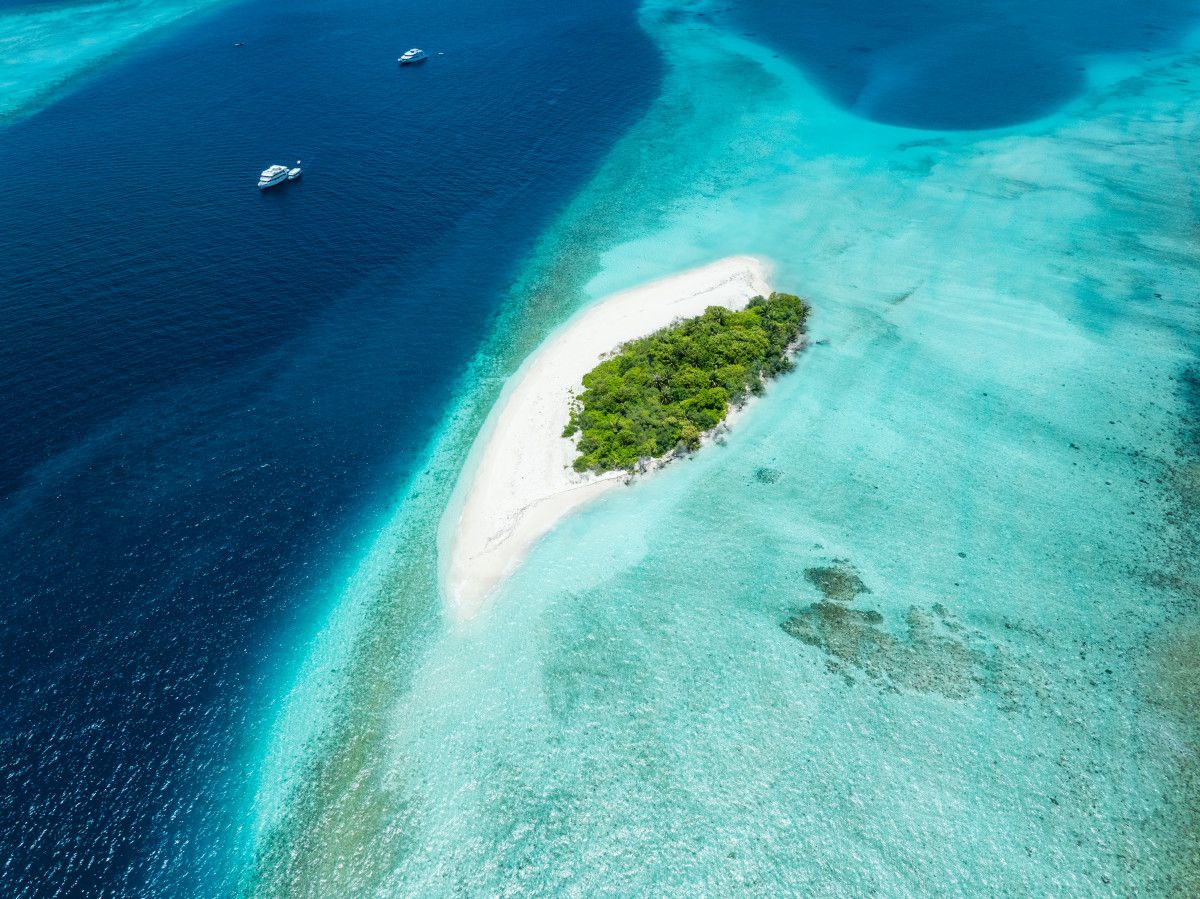
In Dhivehi, there are distinct words for different marine formations and ocean environments. A faru describes a reef. A thila refers to an underwater pinnacle or submerged reef. A falhu is a shallow lagoon enclosed by a reef, while a villus describes deeper lagoon waters. Beyond them lies the kandu, the open sea.
These are not simply geographical terms. They represent centuries of observation, navigation and survival.
Every word tells a story about how closely island communities understood their marine environment.
The ocean that built a nation
The Maldives owes its very existence to the ocean.
Every island stands upon coral reefs that have been growing for thousands of years. Without them, there would be no white beaches, no lagoons, and no islands.
Long before marine science explained reef ecosystems, Maldivians understood their importance.
Traditional livelihoods depended on healthy reefs and productive waters. The sea provided food, transport and trade routes connecting communities scattered across more than 800 kilometres of ocean.
Even today, one of the country's most enduring traditions remains tied to the sea.
The Maldives is internationally recognised for its pole-and-line tuna fishery, a practice passed down through generations. It remains one of the world's most sustainable fishing methods, demonstrating a relationship with the ocean based not on extraction, but stewardship.
The principle is simple: take what is needed while ensuring the ocean can continue to provide.
The ocean of tomorrow
Today, the relationship continues to evolve.
The ocean that once inspired legends now inspires research, conservation and restoration.
Across the Maldives, coral nurseries are helping damaged reefs recover. Marine protected areas safeguard critical habitats for sea turtles, reef sharks, manta rays and whale sharks. Local communities, scientists, conservation organisations and tourism partners work together to protect ecosystems that support both biodiversity and livelihoods.
Yet the goal remains much the same as it was generations ago.
To understand the ocean.
To respect it.
And to ensure it remains healthy for those who come after us.
As the world reimagines its relationship with the sea, the Maldives offers a perspective shaped by centuries of living alongside it.
Here, the ocean is not merely a place to visit.
It is the foundation of stories, culture, knowledge and identity.
It always has been.
And it always will be.