Experience
The reefs that built a nation: why corals remains the Maldives' greatest protection
The story of the Maldives begins with coral. Long before luxury resorts and overwater villas, coral reefs were shaping the islands, protecting their shores and sustaining life above and below the surface. Today, they remain just as important. For a country whose economy and global identity are built almost entirely on tourism, coral reefs are not just a scenic backdrop, they are one of its greatest natural assets. Visitors come to experience the turquoise lagoons, thriving house reefs and remarkable marine life that these ecosystems sustain, making these fragile eco systems an indispensable part of the nation's identity and prosperity.
Yet the ecosystems that have sustained the Maldives for centuries are facing growing pressures on multiple fronts. Rising sea temperatures have triggered repeated mass coral bleaching events, while climate change and extreme weather continue to threaten the resilience of island communities and coastal environments.
Global warming is also intensifying the El Niño–Southern Oscillation (ENSO), a recurring climate pattern driven by shifts in sea surface temperatures and atmospheric pressure across the equatorial Pacific. As these events become stronger and more prolonged, the Maldives has experienced increasingly severe bleaching episodes, placing additional strain on coral ecosystems throughout the archipelago.
For a nation built on coral, the decline of its reefs is more than an environmental concern; it is a challenge to the very foundations of the country itself.
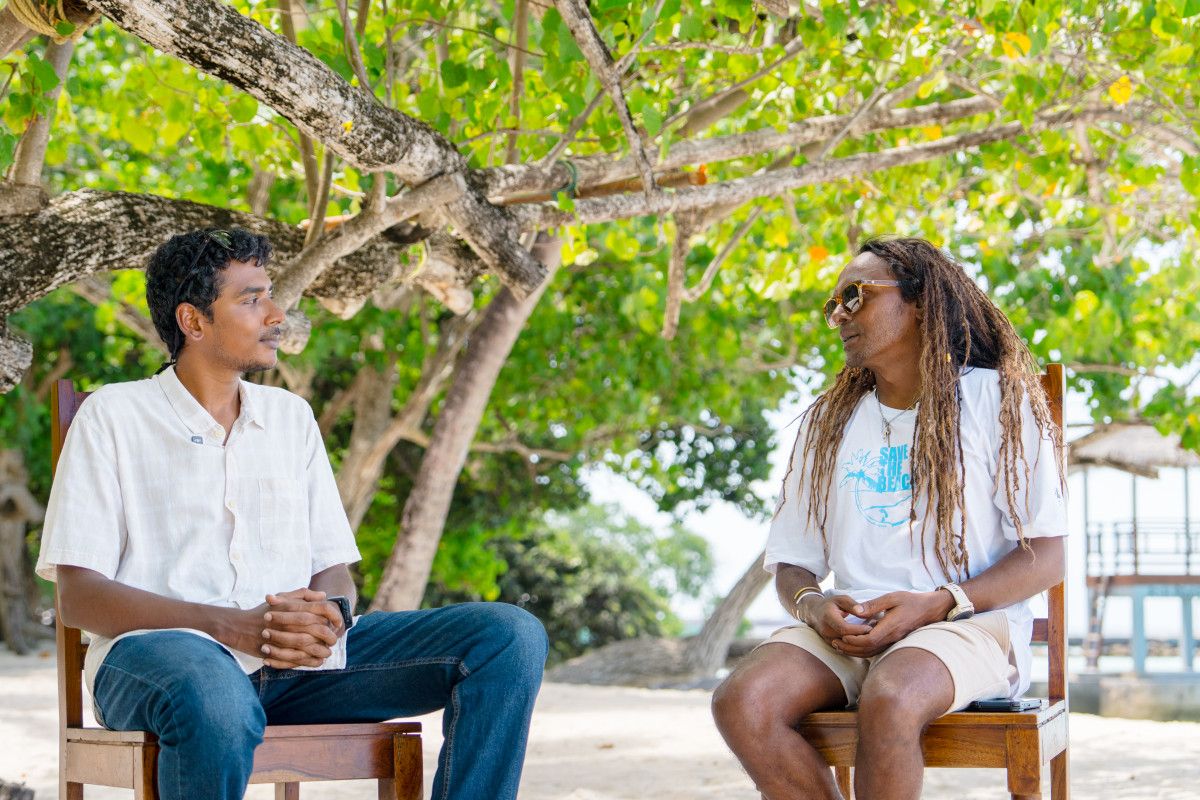
These themes were explored in a recent episode of the Sunnyside podcast, recorded in Vilimalé, one of the most eco friendly islands in the Maldives, where environmental advocate and Save the Beach co-founder Hassan Ahmed, (Beybe), reflected on the state of Maldivian reefs, the pressures they face, and what coral restoration can realistically achieve and how community engagement, scientific research and tourism can support long-term conservation efforts.
Living with the reef, not against it
For Beybe, understanding the importance of coral begins with
recognising its role in everyday life.
Vilimalé offers a practical example of how eco-friendly
living can become part of daily life within an island community. Established
with sustainability in mind, the island has preserved its green spaces and
mature trees for more than five decades and relies exclusively on electric
vehicles for transport. According to Beybe, these measures have helped maintain
natural drainage systems and reduced flooding during periods of heavy rainfall.
The same principle, he argues, applies beneath the surface.
Successful coral restoration depends not only on scientific techniques, but
also on communities that understand and value the ecosystems around them.
Long-term resilience comes from combining local stewardship with research,
education and practical conservation efforts.
In the Maldives, protecting reefs is not solely an
environmental issue; it is an investment in the future of the islands and the
people who depend on them.
Living with a changing climate
Like coral ecosystems around the world, Maldivian reefs are increasingly affected by rising sea levels and mass bleaching events.
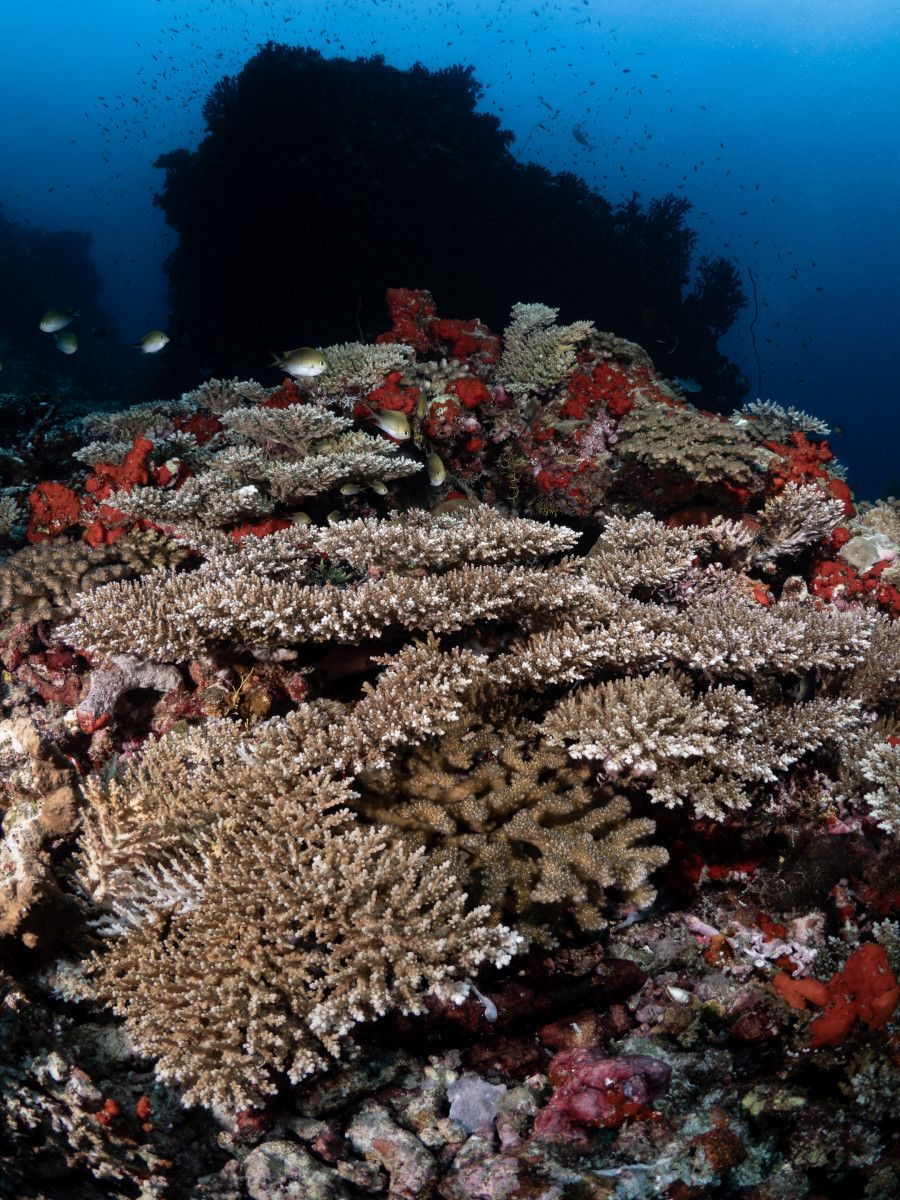
The 1998 El Niño event remains one of the most severe in the Maldives history, affecting around 80 per cent of its shallow reef corals. Yet many reefs recovered in the years that followed, with some returning in even stronger condition. The 2016 El Niño event brought another devastating setback, bleaching entire reef systems and leaving only a small number of surviving colonies.
Even then, signs of renewal appeared remarkably quickly. However, according to Beybe, a coral recruitment study done in 2017, recorded large numbers of babycorals settling on damaged reefs, demonstrating the natural regenerative capacity of these ecosystems. Furthermore, Beybe explained that the recovery period typically begins between April and June, following the peak bleaching season. During this time, many baby corals continue to spawn, releasing larvae that settle onto available substrates, despite the bleaching process. While not all survive, those that are better adapted to warmer conditions go on to survive and settle on the substrates, contributing to the gradual recovery and resilience of the reef.
The 2024 bleaching event posed fresh challenges. Although mortality rates were lower than those seen in 2016, certain species, particularly table corals along outer reef rims, suffered significant losses.
Despite these repeated disturbances, Beybe remains optimistic that recovery is possible, provided that additional human pressures are reduced.
Why understanding reefs matters
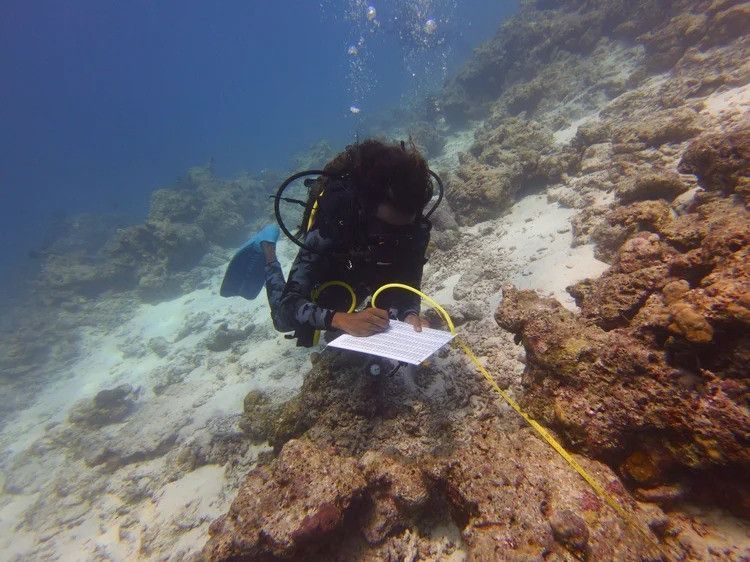
According to Beybe, effective conservation begins with knowledge and better understanding of what really happens beneath the surface. Through long term monitoring, scientific surveys and research expeditions that provide vital information needed to take necessary action.
Such monitoring has revealed an important truth: not all reefs recover at the same pace. Areas subjected to heavy human activity often struggle to regenerate, even when natural recovery processes are still taking place.
While reefs once recovered largely on their own, climate change and human pressures mean that many ecosystems now require additional support. Lasting results depend entirely on restoration efforts being practised consistently and backed by ongoing research, monitoring and community stewardship, rather than short-term interventions alone.
The unseen threat beneath the sand
In densely populated areas such as Greater Male’, pollution has become another major challenge for both coastal communities and marine ecosystems. Poor waste management, increasing plastic consumption and urban development continue to place additional pressure on already vulnerable reefs, affecting water quality and the habitats that countless marine species depend upon.
Plastic waste continues to affect coastal environments, the problem extends far beyond the litter that can be easily collected during beach clean-ups. Research conducted by Save the Beach has revealed high levels of microplastic contamination, with a single spoonful of beach sand containing hundreds of microscopic particles invisible to the naked eye.
Addressing this issue requires more than occasional clean-up campaigns. It demands broader changes in waste management systems and everyday consumption habits. Reducing plastic use, Beybe argues, must become part of daily life if future generations are to inherit healthier coastlines and protect and safeguard our coral reefs for generations to come.
No two reefs are the same
Years of restoration work across multiple islands have reinforced one lesson above all others: there is no universal solution for reef recovery.
Before beginning any project, Save the Beach conducts detailed assessments to understand local conditions and identify the most suitable methods. Community involvement forms an equally important part of the process, with local residents receiving training and support to eventually take ownership of conservation efforts. According to Beybe, witnessing the positive impact of these initiatives often instils a sense of pride within communities, encouraging people to become more actively involved and committed to protecting their reefs.
Building local knowledge and stewardship, alongside scientific expertise, is essential to ensuring that coral restoration efforts can continue long into the future and create a lasting change.
The objective extends beyond simply planting corals.
"We are creating more coral practitioners and researchers who understand what is happening on our reefs," Beybe explained.
Helping nature recover
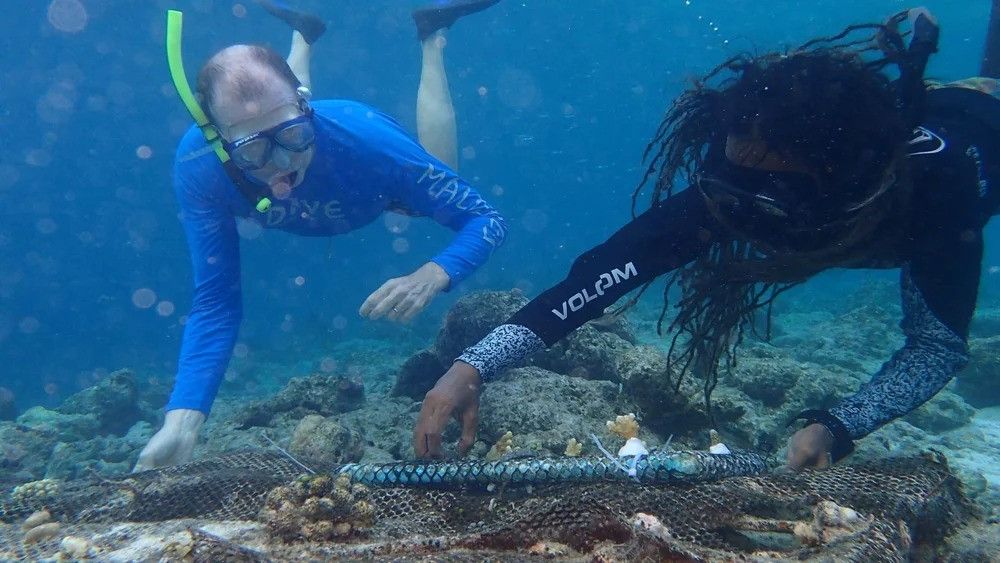
Among the techniques being used is microfragmentation, a method particularly effective for slower-growing coral species.
The process involves dividing genetically identical colonies or corals of the same genotype, into smaller pieces and placing them close together. As these clonal organisms heal, the fragments fuse and join together, creating larger structures, accelerating growth and reducing a process that would naturally take many years in the wild. This allows slower-growing species to recover more quickly and contribute to the wider resilience of the reef ecosystem.
Save the Beach also combines this approach with coral larval restoration and other methods designed to improve both habitat complexity and genetic diversity.
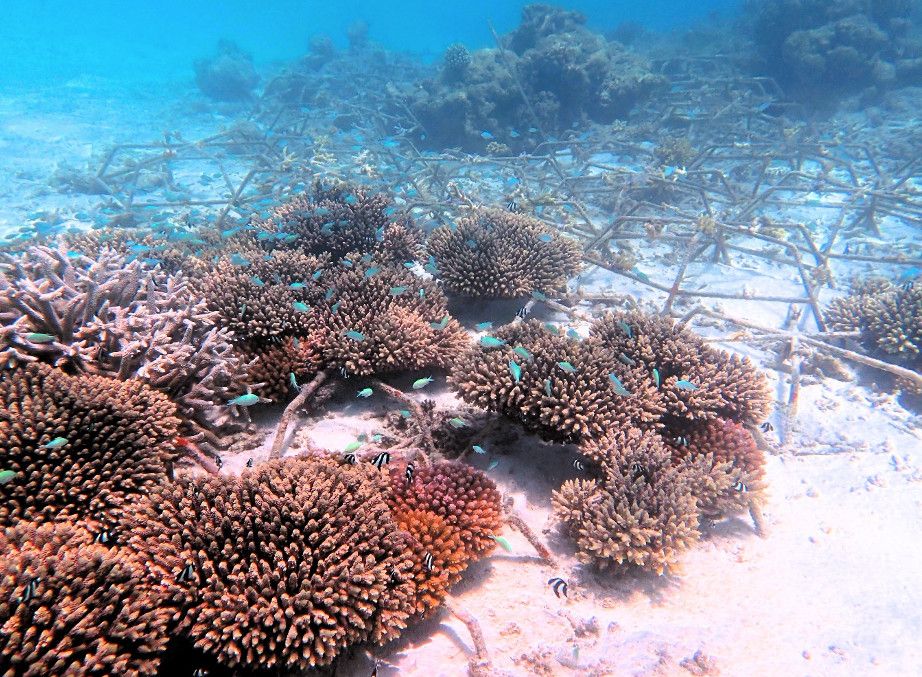
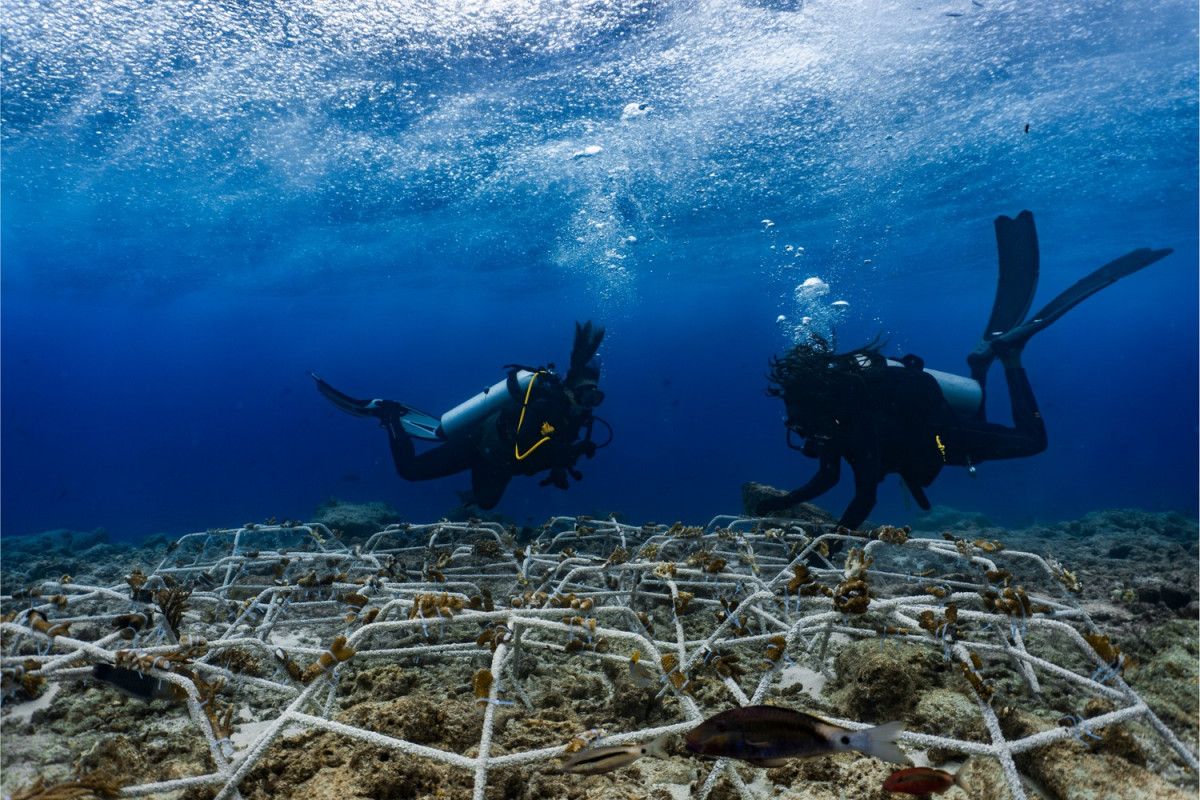
Another technique involves the use of reef stars, which are interconnected structures that provide stable foundations on degraded reefs. These systems encourage coral growth while creating shelter for marine life, and some restoration sites have recorded substantial increases in fish populations within a relatively short period.
For Beybe, diversity is fundamental to resilience. Different coral species and generations respond differently to environmental stress, strengthening the ecosystem as a whole.
For Beybe, these different approaches ultimately serve the same purpose: building more resilient reefs. Different coral species and generations respond to environmental pressures in different ways, and maintaining that diversity strengthens the ecosystem as a whole, giving it a better chance of adapting and recovering in the future.
Tourism's role in protecting the reefs
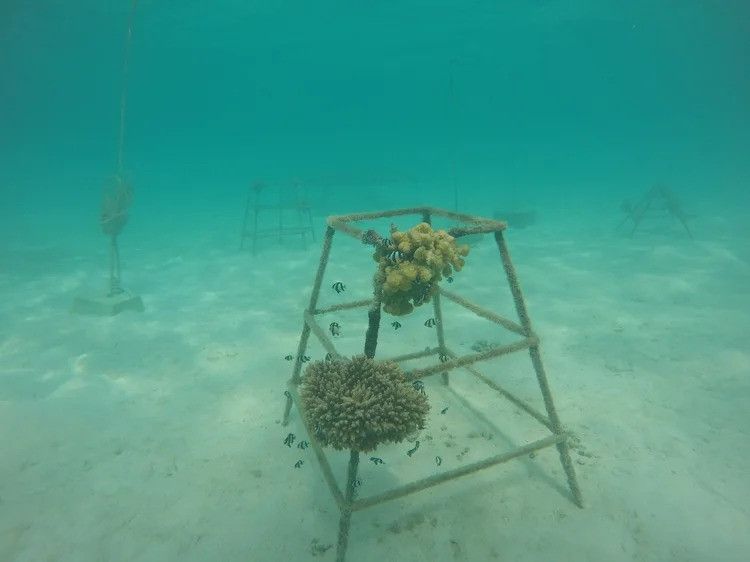
The tourism industry has created valuable opportunities for coral restoration, research and environmental education. Protected resort environments, where human pressures are often lower, often support thriving marine life and provide ideal settings for long-term monitoring and conservation work, giving reef ecosystems a better chance to recover and flourish.
Early projects at resorts such as Meeru Island Resort & Spa and Palm Beach Island Resort & Spa Maldives demonstrated that visitors are increasingly seeking more meaningful travel experiences and are eager to learn about the natural environments they visit. Rather than treating coral restoration as a novelty activity, Save the Beach placed education at the heart of its work, helping guests understand the importance of conservation before involving them in carefully managed initiatives. These experiences not only deepen visitors' appreciation of marine ecosystems but also encourage greater awareness of the challenges facing coral reefs worldwide.
"Corals are not toys," Beybe said, emphasising that they are living organisms deserving of respect.
What the Reefs still promise
The Maldives’ story has always been written in coral. What lies beneath its waters has shaped not only its geography, but also the way life, livelihoods and communities have evolved across the islands.
For Beybe, restoration is not about returning reefs to what they once were. It is about supporting ecosystems that can function, reproduce and continue to sustain the environments around them.
The focus, therefore, is on building resilience for the future rather than attempting to reverse every change of the past.
The challenges facing Maldivian reefs remain significant, but so too does their capacity for renewal. Years of monitoring and research have shown that a lasting difference can be made with continued action; there remains optimism that the Maldives’ reefs can recover and continue to thrive for generations to come.
Catch the full episode of Sunnyside Talks with Hassan Ahmed (Beybe) and explore the conversation on Maldivian coral reef conservation via youtube.