Experience
Where flavour meets memory, inside Chef Naf’s book launch at Amilla Maldives
The scent reaches first.
At Barolo, it drifts softly across the table before the dish even takes shape. Coconut, warmth, something unmistakably familiar. Around me, a small group of local media leans in, drawn not just by the food, but by the quiet sense that this moment carries more than a recipe.
At the centre of it stands Fathimath Nafha Ismail, known simply as Chef Naf.
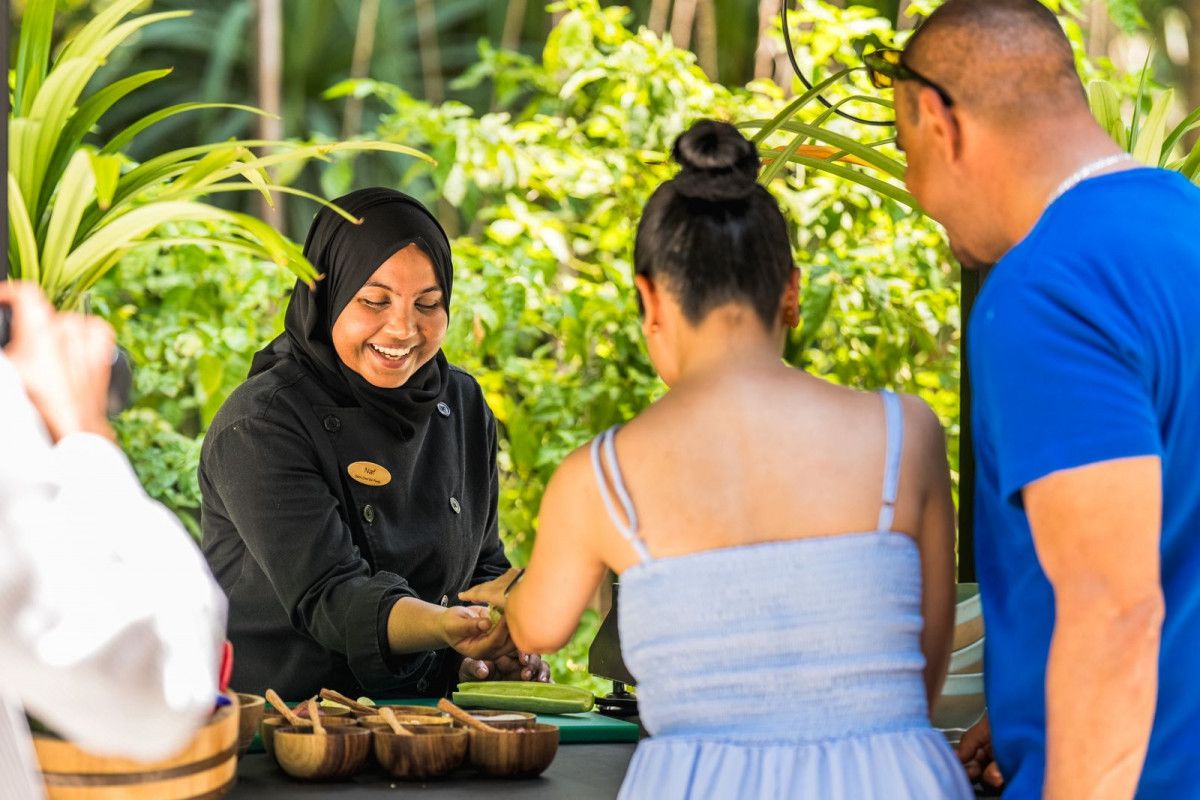
She is preparing kirugarudhiya, a dish most of us know well, one we have grown up with, one that rarely asks to be explained. Yet here, in this setting, it feels different. Slower. Considered. Almost like it is being introduced to us again.
This is not just another demonstration. It is the day her book, Kanethi Taste, is launched. And just a few steps away, watching closely, is her mother, the person who passed down the recipe, one that traces back further, to her grandmother.
There is a pause in the room when that connection settles in.
At one point, Naf recalls a conversation with a Michelin-starred guest who once dined at the resort. He had told her that success, recognition, and technical mastery can take a chef far. But when it comes to a mother’s recipe, there is always something that cannot be replicated. Not quite.
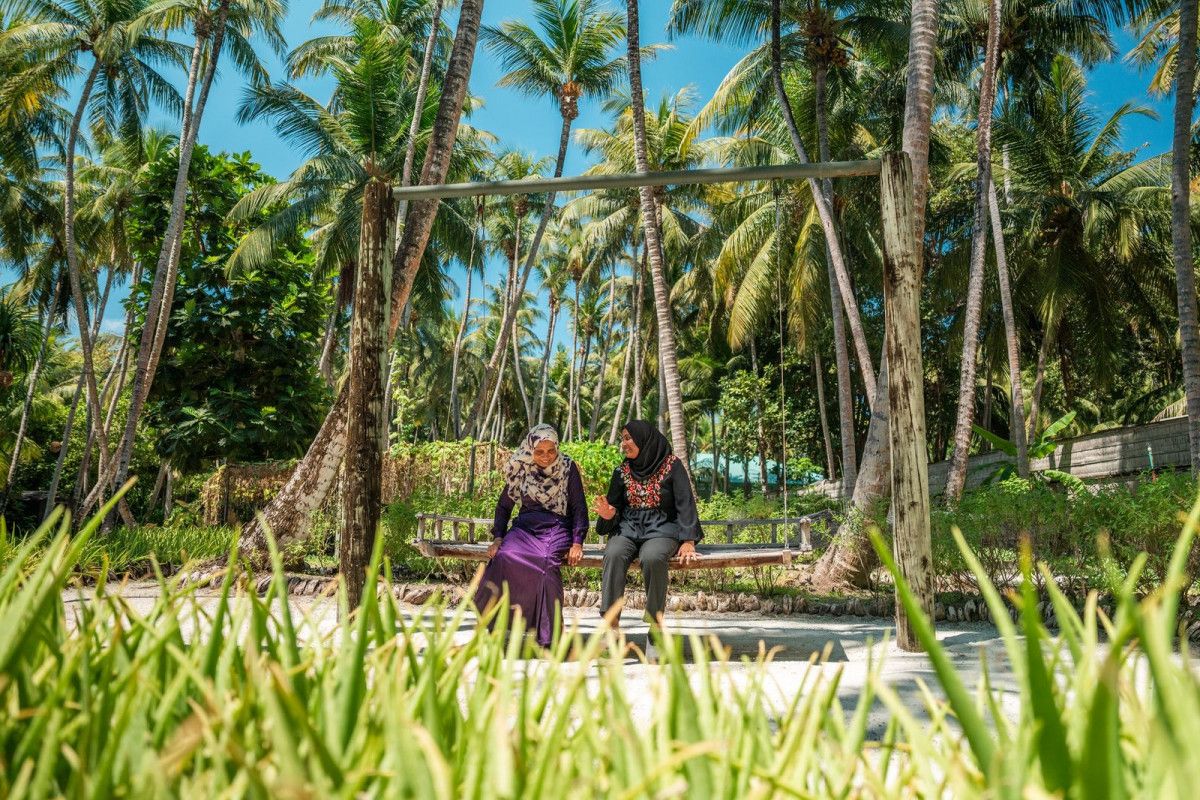
She does not try to prove him wrong. Instead, she continues cooking.
There is an ease in the way she moves. No hesitation, no over-explanation. Each step flows into the next, measured but instinctive. She speaks as she cooks, guiding us through ingredients, proportions, small decisions that rarely make it into written recipes. It becomes clear that what we are witnessing is not just technique, but memory in motion.
For a dish so deeply embedded in everyday Maldivian life, it begins to take on new meaning. The simplicity is no longer just simplicity. It is precision shaped over time. It is adaptation, where local flavours meet broader culinary influences without losing their identity.
Earlier in the day, that connection to ingredients began elsewhere.
In the heart of Mystique Garden, Naf walks us through the island’s organic garden. It is here that the experience quietly starts. Among herbs, fruits, and vegetables grown in the island’s soil, the conversation shifts from dishes to origins.
She speaks about how each ingredient finds its place in Maldivian cooking. How certain flavours come together, not by design, but by tradition. The garden is not presented as a backdrop. It is part of the process. Guests are not just shown what is used, they are invited to understand why.
By the time we return to Barolo, the dish on the table feels connected to something larger.
Kanethi Taste is built on that same idea. It does not present Maldivian cuisine as something to be simplified or adapted for an audience. Instead, it brings readers into it, as it is, rooted in family, shaped by memory, and carried forward through people like Naf.
The launch itself moves at an unhurried pace, much like the island. Conversations stretch, meals are shared, and stories settle in between.
But it is in that single moment, watching a familiar dish come together under the gaze of three generations, that the purpose of it all becomes clear.
This is not just about documenting recipes. It is about holding on to something that is often passed quietly, from one hand to another, without ever being written down.
To hear more from Chef Naf, and to explore how Amilla Maldives continues to support and elevate local voices, listen to this month’s Sunny Side Talks podcast.