News
Six Senses Kanuhura launches 3D reef monitoring program, setting a new benchmark for Maldivian conservation
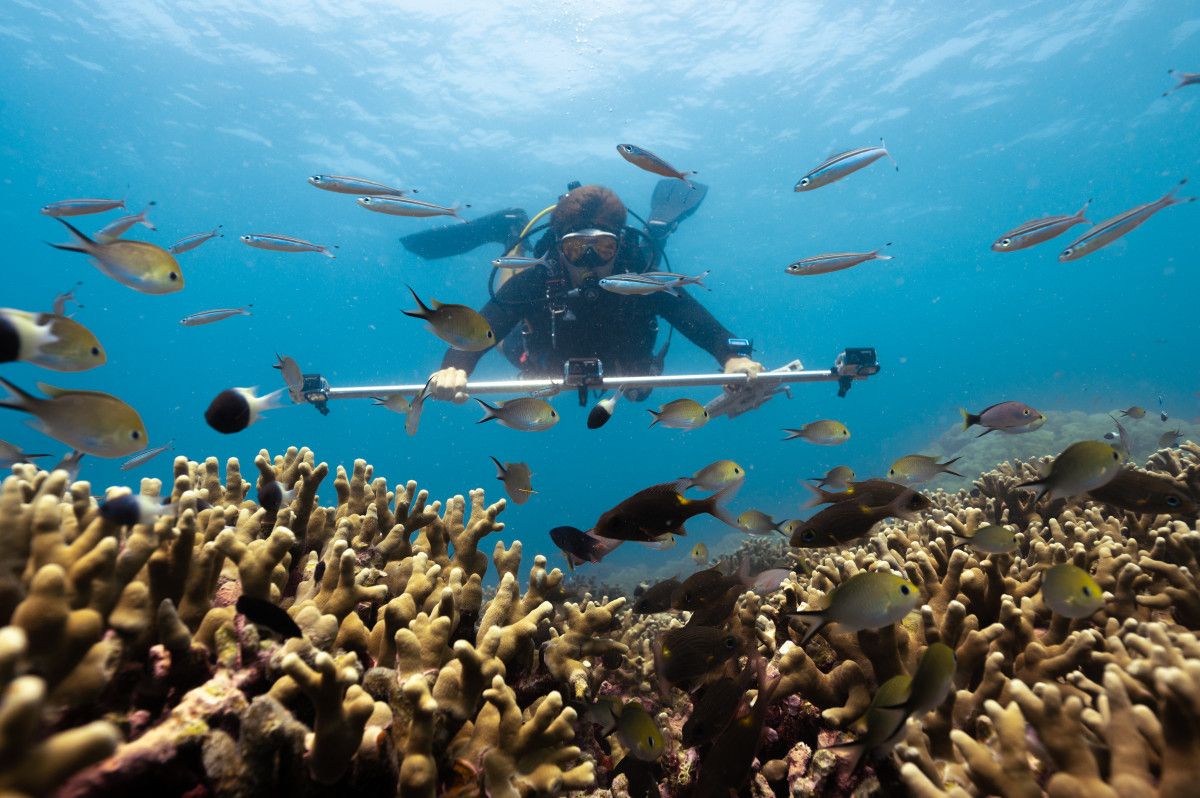
Six Senses Kanuhura has announced a pioneering new initiative that positions the resort at the forefront of marine conservation in the Maldives: the Kanuhura Coral Census, the first long-term, 3D reef-monitoring program implemented by a resort anywhere in the world. Developed in collaboration with leading scientists from Newcastle University and University College London (UCL), this cutting-edge methodology delivers an unprecedented level of accuracy, data integrity, and ecological insight. The launch comes at a critical moment, as global studies warn that up to 90% of the world’s coral reefs may be lost by 2050.
Reinventing How Reefs Are Studied
For decades, coral reef monitoring worldwide has relied on clipboards, tape measures, and diver observations — methods that, while valuable, capture only small portions of reef systems and leave significant gaps in understanding. Traditional surveys are often slow, highly subjective, and limited in scale, typically assessing far less than 0.01% of any given reef site.
The Kanuhura Coral Census addresses these long-standing limitations through the use of 3D modelling and advanced AI analysis techniques, including Gaussian splatting. This innovative system maps more than 100 square metres of reef at each site, capturing structural details down to half a millimetre. The result is a hyper-accurate, fully repeatable digital replica of the reef — a milestone not previously achieved within the resort sector.
What Makes the Kanuhura Coral Census Revolutionary
The program overcomes the shortcomings of conventional reef surveys through several transformative advances:
- Large-scale digital reef mapping: Entire reef sections are captured in ultra-high resolution rather than isolated snapshots.
- Rapid fieldwork: Just 20 minutes of diving is required to collect all images needed for each 3D model.
- Elimination of human bias: AI-based analysis ensures consistent and objective data, regardless of the surveyor.
- Unmatched ecological detail: Reef rugosity, coral canopy height, overhangs, and habitat complexity are recorded — key resilience indicators often missed by traditional methods.
- Perfect repeatability: The same reef sections can be re-surveyed at regular intervals, creating the Maldives’ most accurate time-series coral dataset.
- Visual storytelling: Immersive 3D models allow findings to be clearly communicated to guests, researchers, and the wider public, transforming abstract data into compelling visual evidence.
“The Kanuhura Coral Census marks a major leap in reef science within the hospitality sector,” said Alicia Graham, General Manager of Six Senses Kanuhura. “By introducing advanced reef mapping, the resort is not only elevating how reefs are monitored, but also redefining what is possible. This approach allows even the smallest changes to be tracked with scientific precision, enables transparent sharing of findings, and supports informed decisions that directly contribute to reef recovery. The project represents a new era of accountable and impact-driven conservation in the Maldives.”
Looking Ahead: A Data-Driven Restoration Future
The long-term objective of the Kanuhura Coral Census is to inform a next-generation reef restoration strategy that moves beyond traditional metal frames toward more sustainable, ecologically informed solutions. With precise data identifying which corals are thriving, struggling, recruiting, or bleaching — and where — Six Senses Kanuhura aims to develop a restoration blueprint that sets a new benchmark for marine conservation in the region.